

home
join about login
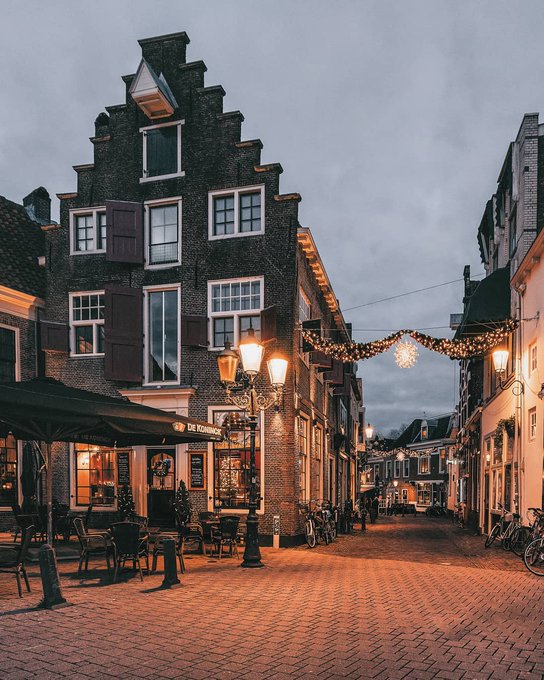
Arquitetura / Architecture

oingoing

Dec. 29, 2018, 5:21 p.m.

image
610 views origin
This is how to train a cat :D How I Trained My Cat - Celebrating 28 Years of the Hubble Space Telescope - Federer pummels Bemelmans to move closer to top spot - Major League Baseball notebook: Mariners deal for Colome, Span fr - NASA Awards Contract for Continued Operations of its Jet Propulsi - Eu vi eu viiiii O papai noel tava na sinaleira - Newest Crew Launches for the International Space Station - amizades - The Extraordinary Spiral in LL Pegasi - Noel Guarany | Sem Fronteira (1975) [Álbum Completo/Full Album] - Wozniacki passes Barty test in Madrid, Sharapova advances - Little Planet Soyuz - Southern California as Seen From Apollo 7 - Fallece un exdiputado federal del PRI tiroteado este fin de seman - Pipi das Meias Altas Portuguese vol 1 - Exclusive: North Korea earned $200 million from banned exports, s - GLORIA GROOVE - SEDANAPO - Dieguito - A Lesma © ℗ MÚSICA AUTORAL Ensaio - NASA Awards Contract for Aerospace Systems Modeling, Simulation - Orion in Red and Blue - Austria plans tougher sentences for crimes against women - Eclipse solar hoje! - Slava Ukraini! on Steam - Launching to Observe Our Sun - Tonella - revisão do limpador de parabrisa do fusca - Guri de Uruguaiana fala sobre hits do Carnaval e exageros no Phot - Los candidatos se disputan el poderoso voto del magisterio mexica - Trump quip about North Korea's Kim sparks outcry on social media - Hello. - Cetus Galaxies and Supernova - Climate change: 'Hothouse Earth' risks even if CO2 emissions slas - At Tranquility Base -  

tutti - social network

Tutti is the simplest social network on internet. Here you can make friends, create communities, sell things, make surveys, comment and share stuff.


PUENTE DE TRETO
El puente de Treto, también conocido como puente Giratorio o puente de Hierro fue proyectado por el ingeniero Eduardo Miera, se compone de una estructura metálica de doble arco parabólico, armada en celosía y apoyada sobre pilares de piedra, con una longitud de 161,74 metros. Construido entre 1897 y 1905 por la Fábrica de Mieres, una de sus secciones, la que pega con la orilla derecha (Colindres), es móvil, diseñada para girar sobre sí misma y permitir el paso de embarcaciones.

El hierro utilizado en la construcción procedía de Amberes, habiéndose montado los tramos parabólicos en Mieres (Asturias) y el giratorio en Lieja (Bélgica). Presenta caracteres estilísticos innovadores y de carácter futurista (inspirados en la escuela de Gustave Eiffel), resaltando un aspecto sólido, suave, sencillo, sin exageraciones y bien resuelto.
image
Django tips and tricks

As far as I know there is no way for the browser to tell the application what is the user's timezone.
That is a problem when you want to run an international site, mostly when users from different places save time related stuff.
Some people suggest to just ask the user what his timezone is.
I did not want to bother them with that, so I created this little hack.
this involves a context processor and some javascript.

So lets start with the context processor in django.
you start by writing your context_processor.py file
 from django.utils import timezone
def timezone_processor(request):
# look for a cookie that we expect to have the timezone
tz = request.COOKIES.get('local_timezone', None)
if tz:
tz_int = int(tz) # cast to int
# here we decide what will prefix timezone number
# the output of tz_str will be something like:
# Etc/GMT+1, GMT+0, Etc/GMT-2
if tz_int >= 0:
tz_str = 'Etc/GMT+'+tz
else:
tz_str = 'Etc/GMT'+tz
# this forces timezone
timezone.activate(tz_str)
# Now we tell the template that we have a timezone
return {'local_timezone': tz}

For the context processor to work you must declare it in settings.py
 TEMPLATES = [
{
.........
'OPTIONS': {
'context_processors': [
.........
'myapp.context_processors.timezone_processor',
],
},

Ok, so this code just create a timezone string and activates it.
A template context processor returns a dictionary that will be sent to the context of the template when rendering. Here we are returning local_timezone.
But where this cookie come from? Lets go to the template and make this javascript trick.

 <!-- if django already knows timezone we will not run it again -->
{% if not local_timezone %}
<!-- getTimezoneOffset does the trick! -->
<!-- it return minutes so we divide to get hours -->
timezone = new Date().getTimezoneOffset() / 60;
document.cookie = 'local_timezone=" + timezone;
<!-- set a cookie with this value and we are done -->
{% endif %}
*for simplicity I didn't include cookie expires nor half hour timezones like North Korea.

So it's first time the user enters the site. Django doesn't know yet it's timezone.
As local_timezone comes empty, we run this javascript lines, get the timezone offset and save it in a cookie.

Next page the user enters, the context processor will read that cookie and will activate the appropriate timezone.
If you need to activate it the very first time, just make it refresh after setting the cookie.

Well that's it, hope this helps you.
more