home
join about login
Tattoo

oingoing

March 5, 2019, 4:13 p.m.


image
531 views origin
The Extraordinary Spiral in LL Pegasi - Launching to Observe Our Sun - Hello. - Eclipse solar hoje! - Newest Crew Launches for the International Space Station - Little Planet Soyuz - amizades - Major League Baseball notebook: Mariners deal for Colome, Span fr - Austria plans tougher sentences for crimes against women - This is how to train a cat :D How I Trained My Cat - Guri de Uruguaiana fala sobre hits do Carnaval e exageros no Phot - NASA Awards Contract for Aerospace Systems Modeling, Simulation - Federer pummels Bemelmans to move closer to top spot - GLORIA GROOVE - SEDANAPO - Orion in Red and Blue - Cetus Galaxies and Supernova - Los candidatos se disputan el poderoso voto del magisterio mexica - Southern California as Seen From Apollo 7 - Dieguito - A Lesma © ℗ MÚSICA AUTORAL Ensaio - Celebrating 28 Years of the Hubble Space Telescope - Climate change: 'Hothouse Earth' risks even if CO2 emissions slas - Trump quip about North Korea's Kim sparks outcry on social media - Wozniacki passes Barty test in Madrid, Sharapova advances - Pipi das Meias Altas Portuguese vol 1 - Exclusive: North Korea earned $200 million from banned exports, s - Eu vi eu viiiii O papai noel tava na sinaleira - Tonella - revisão do limpador de parabrisa do fusca - Fallece un exdiputado federal del PRI tiroteado este fin de seman - Noel Guarany | Sem Fronteira (1975) [Álbum Completo/Full Album] - NASA Awards Contract for Continued Operations of its Jet Propulsi - At Tranquility Base - Slava Ukraini! on Steam -  

tutti - social network

Tutti is the simplest social network on internet. Here you can make friends, create communities, sell things, make surveys, comment and share stuff.
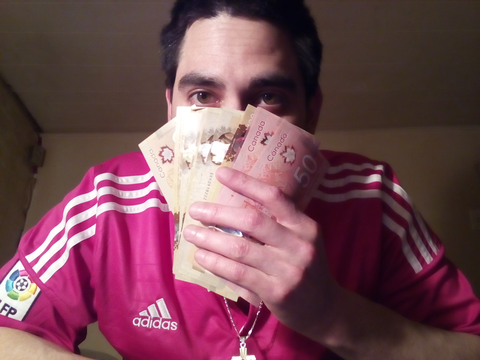
" Abuelo... Abuelo! en mi libro de historia dice que en marzo de 2020 hubo una pandemia! Pero qué pasó?"
-" Sucedió que desde China llegó hasta nosotros un terrible virus de gripe nunca estudiado antes..."
" Y luego?"
-" Todos nos pusimos en cuarentena, nadie podía moverse de casa excepto para comprar alimentos en el supermercado.
Sucedió en cualquier momento, el día anterior estábamos todos juntos... amigos, familiares, luego la mañana del 9 de marzo nos encontramos con la vida al revés."
" Y luego qué pasó?"
-" Nos quedamos mucho tiempo con solo contacto por internet, por suerte existían teléfonos y computadoras. La gente se ha responsabilizado, hemos contaminado menos, hemos redescubierto cosas que no creíamos que sabíamos hacer.
Finalmente llegó la buena temporada, y el primer pensamiento fue salir para conocer a todos. El mundo se había parado para nosotros, pero hubo un aspecto positivo: entendemos el valor de las cosas precisamente porque nos quitaron.
Y créeme sobrina, que el café que bebí cuando el bar volvió a abrir, aunque se hizo con el mismo grano que antes, estaba delicioso.
" Por qué?"
-" Porque sabría a un país que lo había logrado." ❤️
image
Salve as Toninhas

Although it has been, and remains, a major challenge to obtain quantitative data for proper population assessment, there is reason to believe that the Franciscana is threatened throughout its range, and particularly in areas of intensive gillnet fishing. As stated in the IUCN cetacean action plan, the Franciscana "may be at greater risk of extinction than any other cetacean species in the western South Atlantic," and "the greatest immediate requirement" for its conservation is "to reduce levels of incidental mortality in gillnets" (Reeves et al. 2003). Simulations of the Rio Grande do Sul/Uruguay (hereafter RS/URU) subpopulation using a plausible range of assumed rates of increase and an estimated removal rate based on available abundance and bycatch data suggest a decline over three generations of close to 50%, which would meet the decline threshold for EN under criterion A. The suspected reduction in population size and its causes may not have ceased (subcriterion A2), based on actual or potential levels of exploitation (in the form of bycatch) (subcriterion d under A1). Two other lines of evidence (indices) can be interpreted as corroborative of a marked decline in abundance of this subpopulation: (1) a decline of approximately 71% in the bycatch of franciscanas per unit of fishing effort was reported in Uruguay from the 1960s to 1980s; and (2) stranding rates of franciscanas in southern Brazil decreased by nearly 70% between the 1970s and 1990s. The Cetacean Specialist Group, having reviewed the data and analyses presented by the assessors (and see Secchi and Wang 2002), was reluctant to recommend EN status at this time (May 2003). Instead, it was agreed to recommend VU status, on the understanding that a reassessment and re-evaluation would be conducted in the near future, taking into account newly obtained data on abundance and bycatch, and perhaps treating the existing evidence with somewhat more elaborate statistical methods. Consultation and Peer Review: Information included as supporting documentation for this assessment was discussed with participants at the 4th Workshop for the Coordination of Research and Conservation of Franciscana in the Western South Atlantic (held in Porto Alegre, Brazil, in 2000). That group discussed progress on Franciscana research and expressed support for the need to change the IUCN Red List status of this species. This documentation was drafted principally by Eduardo Secchi and John Wang, and their work was edited and revised by Randall Reeves following extensive review by the membership of the Cetacean Specialist Group prior to submission to IUCN. For further details, see Secchi and Wang (2002).


http://www.iucnredlist.org/details/full/41761/0
more